
How Office Pods Create Better Workplace Wellness Spaces
Blog
Why Open Offices Need Dedicated Wellness Spaces
Open-plan offices make collaboration easier, but one shared setting does not work for every task. Employees may need a quieter place to focus, take a private call, hold a sensitive conversation, or step away from constant activity for a few minutes.
Noise, Interruptions, and a Lack of Privacy
At an open desk, everyday conversations, video calls, and foot traffic can make concentrated work or personal communication difficult. Without an alternative space, employees may take calls in corridors, occupy meeting rooms for short tasks, or delay conversations that require privacy.
A dedicated wellness space gives those moments a clear place in the office. It supports activities such as:
- Short quiet breaks away from shared work areas
- Focused individual work
- Private calls or video meetings
- One-to-one conversations that should not happen at a desk
A Wellness Space Is More Than a Break Room
A break room is usually built for eating and socializing. A meeting room is designed for scheduled group discussions. A wellness space serves a different function: it offers a calm, private setting for individual recovery, concentration, or sensitive communication.
Office pods can create this option within an existing workplace. The right solution starts with a simple question: what should people be able to do in the space? That answer should guide the pod’s size, layout, comfort features, and location.
How Office Pods Support Workplace Wellness and Productivity
Office pods do not replace every part of a workplace wellness strategy. They do, however, give employees a practical choice when an open desk, busy meeting room, or shared break area does not suit the activity in front of them.
A Quieter Place to Focus and Reset
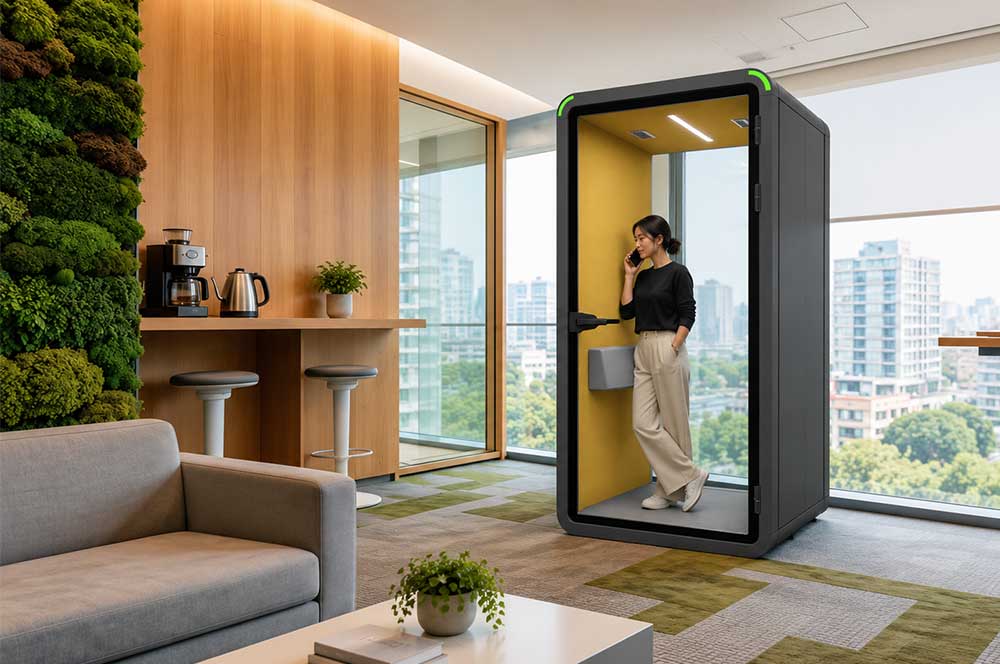
A pod creates a defined space away from surrounding conversations and movement. Employees can use it for a short period of focused work, a quiet pause between tasks, or a video call without adding more noise to the main office. This benefits both sides of the enclosure:
- The pod user has fewer nearby distractions.
- Nearby colleagues are less disrupted by calls and conversations.
- Shared work areas can remain available for day-to-day collaboration.
Privacy for Sensitive Conversations
Not every conversation belongs at an open desk. One-to-one discussions, interviews, coaching sessions, or personal calls may require more privacy and a calmer setting.
An office pod can provide a dedicated space for these moments, provided that its acoustic performance, visual privacy, seating, and location match the intended use. It should reduce speech transfer and distraction, rather than be presented as a guarantee of complete silence or confidentiality.
More Choice During the Workday
Wellness at work is not only about taking a break. It is also about giving people a suitable setting for different types of work. An employee may need focused time in the morning, a private call later in the day, and an informal conversation with a colleague afterward.
By adding enclosed spaces alongside open desks and meeting rooms, organizations can create a workplace with more usable options.
Choose the Right Office Pod for Each Wellness Need
The right wellness pod is not simply the largest pod that fits the floor plan. It should match the activity, the usual number of users, and the amount of time people are likely to spend inside.
Start with the primary use. A space for a brief private call has different requirements from one used for a seated reset, a coaching conversation, or a small team discussion.
| Primary need | Typical users | What the pod should support |
|---|---|---|
| Quiet break or focused task | 1 | A calm setting, comfortable seating, and enough room to use the space without feeling rushed |
| Private call or video meeting | 1 | Speech privacy, reliable power, lighting, and a suitable work surface |
| One-to-one conversation | 2 | Face-to-face seating, personal space, and privacy for discussion |
| Small group check-in | 3–4 | A practical meeting layout, ventilation, and room for collaborative conversation |
-
Single-Person Pods for Individual Privacy
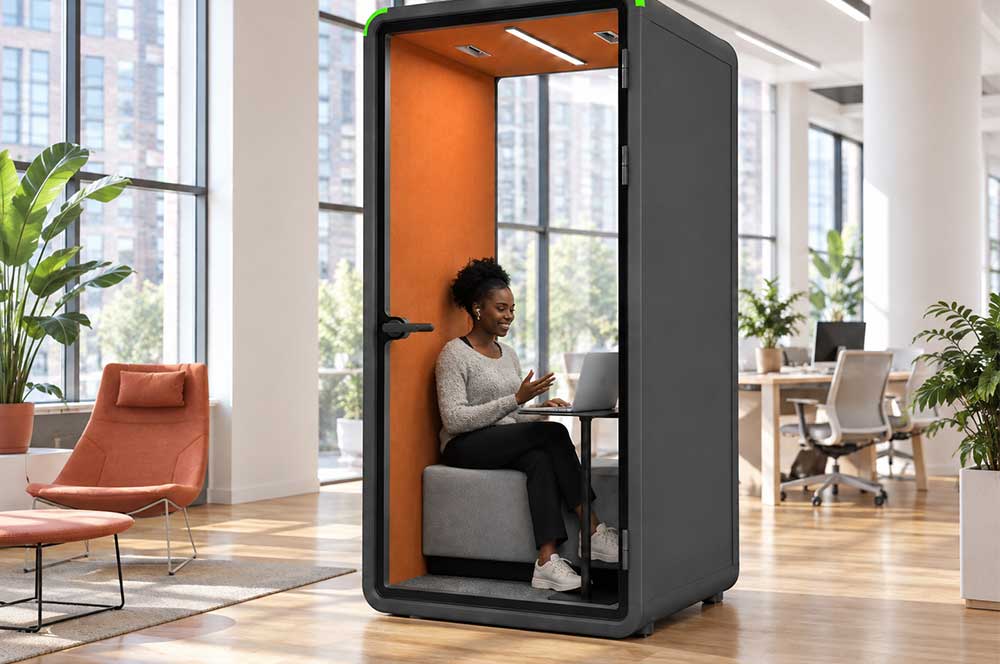
An M&W Model S single-person office pod can work well for short focused tasks, private calls, video meetings, or a brief break from the main office. If the space will also be used for quiet recovery, confirm that the interior layout supports seated comfort rather than standing calls only.
-
Two-Person Pods for Private Conversations
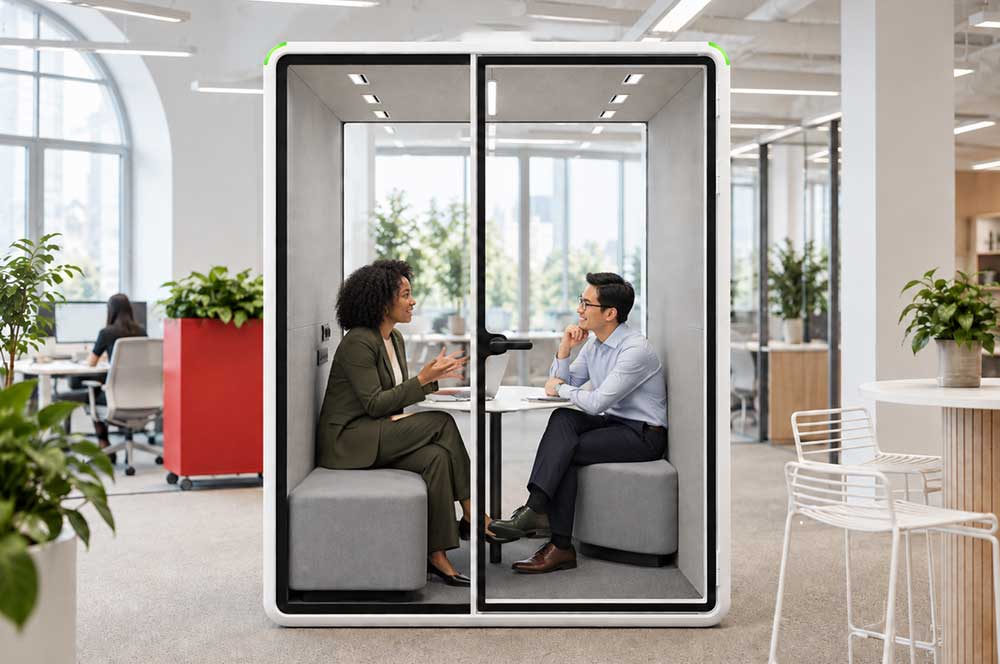
Two-person pods are better suited to mentoring, interviews, manager check-ins, and other conversations that need a more private setting. Consider seating, legroom, table size, and whether the location gives users enough visual privacy.
-
Larger Pods for Small-Group Needs
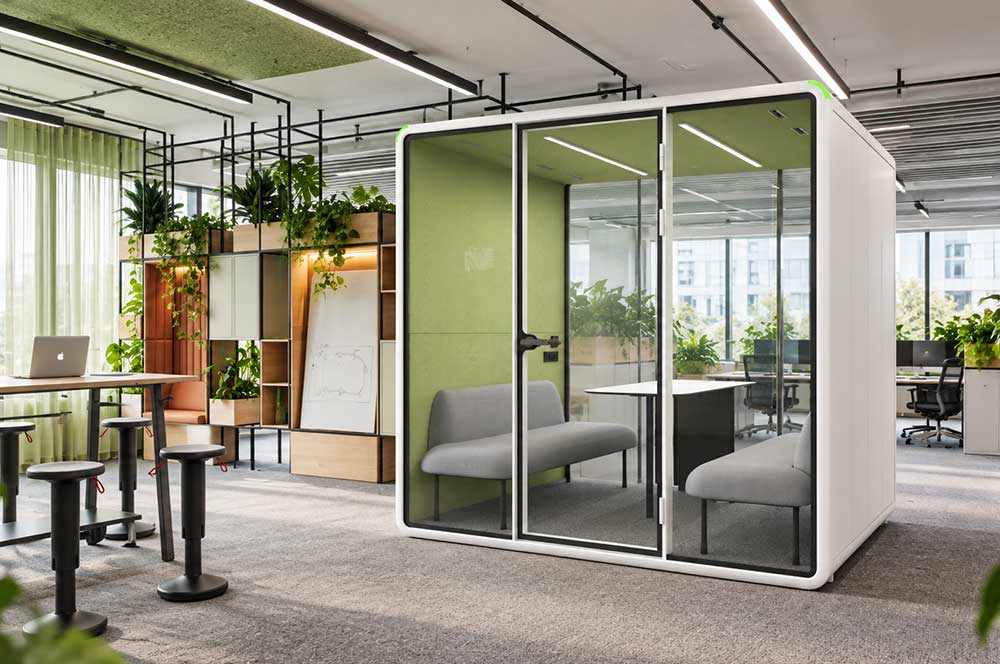
A larger pod may suit small team check-ins, project conversations, or hybrid discussions. It should not become the only wellness space in the office if employees also need a quick, individual place to step away.
Capacity is only a starting point. Before selecting a configuration, compare the expected session length, furniture, ventilation, power needs, accessibility, and the route required to deliver and install the pod.
What Makes an Office Pod Comfortable Enough to Use
A wellness pod only works when employees feel comfortable using it. Acoustic materials matter, but they are only one part of the experience. The space also needs to suit the activity, support a reasonable length of use, and feel easy to enter and operate.
| Feature to review | Why it matters | What to check |
|---|---|---|
| Acoustic performance | Helps reduce speech transfer and outside distraction | Ask for complete-enclosure acoustic information, not a wall-panel claim alone |
| Visual privacy | A glazed pod can still feel exposed | Consider glazing, sightlines, nearby traffic, and the planned location |
| Ventilation | Enclosed spaces need usable airflow | Confirm airflow, fan noise, controls, and required clearance |
| Lighting | Supports comfort, focused work, and video calls | Check brightness, glare, and whether lighting can be adjusted |
| Furniture and space | Determines whether people stay or leave | Review seating, desk height, legroom, door operation, and internal layout |
| Power and technology | Supports everyday use | Confirm outlets, charging, data needs, and display options for the selected configuration |
Acoustic Privacy and Visual Privacy Are Different
A pod can reduce nearby noise without providing complete speech privacy, and a quiet pod may still feel too visible if it sits beside a busy walkway. Review both conditions separately. For sensitive conversations, consider what people can hear, what they can see, and how often others pass the entrance.
Design for the Intended Length of Use
A standing phone booth may suit a short call. A wellness space used for a longer focus session, one-to-one conversation, or quiet reset may need more seating comfort and interior space.
Before choosing a configuration, ask:
- How long will people normally use the pod?
- Will they sit, stand, work on a laptop, or speak with another person?
- Which features are included, optional, or unavailable for this model?
- Does the proposed layout support the intended use without feeling crowded?
A pod that is well matched to its purpose is more likely to become a useful part of the workday.
Plan Placement and Rules That Protect Wellness Use
A wellness pod should be easy to reach without becoming part of the office’s busiest activity zone. Placement and everyday rules determine whether it becomes a trusted resource or simply another meeting booth.
Place Pods Where People Can Use Them Comfortably
Choose a location that is convenient for the teams who need it, while avoiding unnecessary noise, foot traffic, and visibility.
Before finalizing the layout, review:
- Distance from kitchens, social zones, printers, and other high-noise areas
- Sightlines from nearby desks and main circulation routes
- Clear access around the door and the surrounding walkway
- Ventilation clearance, power access, emergency egress, and applicable accessibility requirements
- Whether the space is close enough for everyday use without disrupting quieter work areas
A private-call pod may sit near a collaborative zone for quick access. A pod intended for focused work or a quiet break may need a calmer position away from constant movement.
Set Clear, Respectful Use Rules
A wellness pod can lose its purpose if routine calls and meetings always take priority. Give the space a clear primary use, then explain how other activities fit around it.
| Operating decision | Practical approach |
|---|---|
| Primary purpose | State whether the pod is for quiet breaks, private conversations, focused work, or shared use |
| Booking | Use short reservations where needed; do not require employees to disclose personal reasons |
| Shared use | Define whether calls and meetings are permitted and when they take priority |
| Availability | Make occupied or available status easy to understand |
| Review | Ask employees whether the space is serving its intended purpose and adjust the rules if needed |
Good management keeps the wellness space useful without making employees ask for permission to use it.
Why Modular Office Pods Are a Practical Wellness Solution
Creating a dedicated wellness space does not always require building a permanent room. A modular office pod can add an enclosed setting within an existing workplace while giving teams more flexibility as their layout, headcount, or work patterns change.
Add Private Space Without Rebuilding the Office
Unlike a fixed room built into the office, a modular pod is assembled from prefabricated components. This can make it a practical option for workplaces that need to add space with less disruption to the current layout.
Modular office pods can help organizations:
- Create a private wellness or focus space within an open office
- Add different pod sizes for individual and small-group needs
- Adjust the workplace mix as teams or priorities change
- Select finishes, furniture, and power options that suit the project
Choose a Configuration That Fits the Workplace
M&W offers a range of office phone booths and meeting pods, from compact individual booths to larger meeting pods and configurable modular rooms. Depending on the model, buyers can consider different exterior finishes, interior colors, furniture arrangements, and power connections.
The goal is not to choose a pod based on appearance alone. A suitable wellness solution should fit the intended activity, expected number of users, available floor space, and everyday operating needs.
Start Your Office Pod Project With the Right Details
Before requesting a recommendation or quotation, prepare:
- A floor plan or installation-area dimensions
- The main wellness use: quiet breaks, focused work, private conversations, or meetings
- Expected capacity and quantity
- Required furniture, power, or finish preferences
- Delivery location and project timeline
Planning a more private and flexible workplace wellness space? Contact M&W Office Pods with your project details to discuss a suitable configuration and quotation.